

Word Search Journey: Word Game
TOR Games
I spent time with Word Search Journey: Word Game as a simple word puzzle for short breaks, and my first impression was easy to understand: it is designed to make searching for hidden words feel relaxing rather than intimidating. The game comes from TOR Games, belongs to the word-game category, and is free to start. That combination makes it approachable, especially if you want something you can open for a few minutes without learning a complicated rule set.
The basic appeal is familiar. You look through a letter grid, find the requested words, and work through a journey built around that activity. What makes the experience useful is not novelty for its own sake, but how naturally it fits into spare moments. I could imagine using it while waiting for an appointment, winding down before bed, or taking a quick mental break between tasks. It is a focused activity, yet it does not demand the same commitment as a longer strategy game or a traditional crossword.
How the journey feels in everyday play
The strongest part of this game is its low barrier to entry. Word searches are immediately familiar to most players, so there is no long tutorial burden or complicated control scheme to master. The interaction is centered on spotting words in the grid, which means the challenge comes from attention and vocabulary rather than from fast reflexes. That makes it suitable for players who prefer calm puzzles and for families looking for an Everyone-rated game.
I also found the format easy to fit around an uneven schedule. A short session can feel complete on its own, while a longer session gives you room to continue through more puzzles. This matters because many mobile games are built around keeping you engaged for extended stretches. Here, the central task is more contained: find the words, finish the puzzle, and decide whether you want another one.
That simplicity is both a strength and a limitation. If you enjoy word searches, the direct structure is satisfying because it keeps the focus on the puzzle. If you are looking for a game with a strong story, character development, elaborate strategy, or varied genres of challenge, this will probably feel narrow. Its identity is clear, and it does not try to be an all-purpose brain-training package.
Related News






The store summary presents it as a journey through word-search games, and I think that framing is more useful than expecting a deep adventure. The journey is about moving from one word puzzle to the next, not about exploring a narrative world. That distinction is important before downloading: the game works best when you want a steady stream of familiar puzzles rather than a story-led experience.
What makes the format accessible
Word searches are often easier to approach than crosswords because you do not need to produce an answer from a clue. The letters are already visible; the challenge is recognizing the arrangement. For a player who sometimes finds clue-based word games frustrating, this can feel more forgiving. You can scan, pause, and return to the grid without losing the thread of a complicated clue.
At the same time, the game still rewards deliberate observation. I found that rushing is not always helpful. A better routine is to read the target words first, identify unusual letters or distinctive endings, and then scan the grid in a consistent direction. That small habit reduces random searching and makes the puzzle feel more skill-based. It is one of the practical advantages of this format: improvement comes from changing how you look, not just from memorizing answers.
Gallery
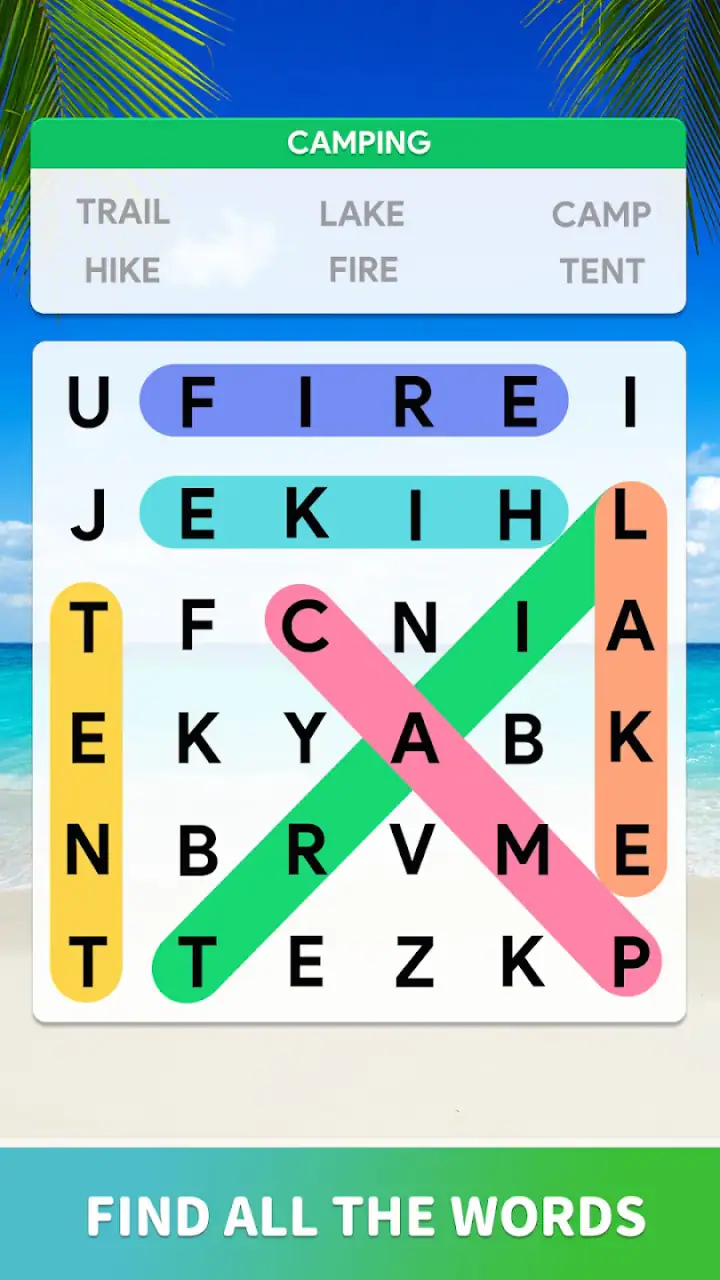
Another useful approach is to avoid staring at the whole grid at once. I prefer dividing it into sections and checking horizontal, vertical, and diagonal lines methodically. When a word seems impossible to find, looking for its least common letter can narrow the search. These are simple techniques, but they make a difference when the board becomes visually busy.
Progress without making it a chore
The journey structure gives the game a sense of direction that a completely random word-search generator may lack. Instead of opening a blank collection of unrelated puzzles, you have a reason to continue from one challenge to the next. For me, that light sense of progress is enough to make the game feel more purposeful without turning it into a demanding daily obligation.
Still, players should be realistic about what this kind of progression can provide. A sequence of word searches is not the same as a role-playing progression system or a competitive ladder. If your motivation depends on building a character, unlocking a large collection of abilities, or comparing detailed performance with other players, this may not hold your attention for long. The reward is mainly the satisfaction of completing puzzles and continuing through the journey.
I would also avoid treating every session as a test of speed. Word-search games are better when you allow yourself to scan carefully. Playing too quickly can turn a relaxing activity into a frustrating hunt, especially when several words share similar letters. The most enjoyable rhythm is usually steady rather than frantic.
Where spending enters the picture
The game is free to download and play, but it includes in-app purchases priced from $0.99 to $89.99 per item. That range is the most important spending detail to notice before starting. The low entry price makes it easy to try without an upfront payment, while the high end means I would personally approach optional purchases cautiously and check each confirmation screen before approving anything.
I cannot fairly describe the purchase system as generous or aggressive without adding details that are not established here. What I can say is that the presence of purchases changes how I evaluate the experience. A free word game is most comfortable when a player can enjoy its core activity without feeling pushed toward payment. Since individual purchase contents and progression effects are not clear from the facts available to me, I would not assume that spending is necessary, nor would I assume that every part of the journey is equally accessible without it.
My practical advice is to decide on a personal limit before playing. If you are installing it on a shared device or letting a child use it, review the device’s purchase controls first. The Everyone age rating describes the content audience, but it does not remove the need for sensible spending safeguards. This is especially relevant because a small optional purchase and a much larger item can appear within the same general game ecosystem.
For a player who wants a completely purchase-free experience, a paid word game with no optional transactions may be a better fit, even if it costs money at the start. The advantage of that alternative is predictability. For someone who only wants occasional puzzles and is comfortable ignoring optional spending, the free entry point here is more convenient.
Does progress create pressure?
My main concern with any journey-based mobile puzzle is whether progress starts to feel like a demand rather than an invitation. In this case, I would treat the journey as a gentle structure, not a commitment. There is no reason to force yourself through a difficult puzzle when you are tired. Taking a break is part of using the game well, because the central value is a few minutes of focused attention, not an endless session.
Players sensitive to interruptions should pay attention to how the game fits their habits during the first few sessions. A word search is naturally calming, but that feeling can change if the surrounding progress or purchase prompts become distracting. I would judge the game by the actual balance between solving and interruption on your device, rather than assuming that every player will experience the same rhythm.
A useful personal rule is to stop after a completed puzzle instead of continuing automatically. That keeps the game in the role of a break and makes it less likely to take over a longer stretch of time. It also helps you notice whether you are playing because you enjoy finding words or simply because you feel compelled to keep the journey moving.
Fairness for solo and competitive-minded players
This is primarily a word-search experience, so its fairness is easiest to judge as a solo puzzle activity. The core challenge is whether the grid gives you a reasonable opportunity to find the listed words, not whether you can outspend another player. I did not find a basis for presenting it as an esports-style contest or for claiming that purchases create a competitive advantage.
That said, players who care about competitive fairness should be careful about expectations. The available product facts do not establish a multiplayer ranking system, head-to-head mode, or public leaderboard. I would therefore choose this game for personal puzzle progress, not because I expect a structured competitive community. If comparing scores with friends is essential to your enjoyment, a word game built specifically around visible rankings may suit you better.
There is a different kind of fairness question in puzzle games: whether assistance undermines the satisfaction of solving. If you use a hint or another aid when stuck, the decision is personal. I prefer to give myself a fixed amount of time to search manually before seeking help, because finding a word after a careful scan feels more rewarding than immediately removing the challenge. Players who want a pure test can simply treat assistance as a last resort.
The absence of confirmed competitive details also means I would not use the rating or install count as proof that the game is fair in every respect. Those figures show that it has attracted attention, but popularity does not explain how difficulty, assistance, or purchases are handled. My trust comes more from whether the actual puzzle loop feels understandable and manageable during play.
Who will enjoy it most
I would recommend this game to people who already like word searches, casual players who want a quiet distraction, and anyone who prefers visual recognition over clue solving. It can also work well for a family member who wants an Everyone-rated game with straightforward interaction. The journey format gives casual play a little more continuity than opening a single isolated puzzle.
It is particularly suitable for short, interrupted sessions. Imagine sitting in a waiting room with only a few minutes available: you can open the game, search through a puzzle, and put the phone away without needing to remember a complicated plot or coordinate with other players. That same quality makes it useful during a commute when attention is available only in small pieces, although I would never use it while driving or doing anything that requires full awareness.
It is less suitable for players who want vocabulary clues, an evolving story, rich customization, or a clearly documented competitive system. Crossword fans may find the lack of clue interpretation too straightforward. Players who enjoy fast arcade pressure may find word searching too slow. People who dislike in-app purchases may prefer a title with a single transparent payment instead.
What I would check before committing
Because the current version is 1.0.16 and the minimum operating system is Android 7.0, compatibility is worth checking before installation. A device running that version or later meets the stated operating-system requirement, but compatibility alone does not tell you whether the game will feel comfortable on your particular screen or under your own notification and purchase settings.
I would also spend the first session learning the game’s natural rhythm rather than buying anything immediately. Notice how easily you can complete a puzzle, whether you enjoy the word selection, and whether the journey gives you enough motivation to continue. A free game deserves a trial period, especially when optional items can range from a small amount to a much larger purchase.
Another sensible habit is to separate puzzle difficulty from personal fatigue. If a grid suddenly feels impossible, try returning later instead of concluding that you need to spend money or use assistance. Word searches are strongly affected by concentration. A fresh look can solve what seemed blocked a few minutes earlier, and that preserves the feeling that progress comes from your own attention.
My trust verdict after weighing the trade-offs
Word Search Journey: Word Game earns a place on my casual-play list because it understands the appeal of a focused word search. It is free to begin, rated for Everyone, and built around an activity that is immediately recognizable. TOR Games has kept the concept easy to approach, which is exactly what many players want from a mobile puzzle they can open without preparation.
The high average rating of 4.9 from around 6,500 ratings, together with more than 100,000 installs, suggests that the game has found a receptive audience. I treat that as useful context rather than a guarantee. A large audience cannot tell me whether the purchase balance, difficulty, or pacing will match my preferences, so I would still test the experience personally before spending.
The game also has 461 reviews, and its release was on May 17, 2023. Those details place it as an established mobile title rather than something I would describe as brand new. Its current version is 1.0.16, which is helpful when checking whether the installed version matches the one being discussed. I mention these details because they make the product easier to identify, not because they replace hands-on judgement.
My final recommendation is conditional but positive: try it if you want calm, accessible word searches with a light sense of onward movement. Keep purchases deliberate, especially because the listed price range reaches $89.99 per item, and do not choose it expecting a confirmed competitive scene or a story-heavy adventure. For a quiet puzzle break, it is a sensible option. For players who need transparent one-time pricing, advanced clue solving, or head-to-head competition, another word game may be the more trustworthy match.
FAQs for Word Search Journey: Word Game
What is Word Search Journey: Word Game?
Word Search Journey: Word Game is a casual puzzle app built around classic word-search challenges. You swipe across letter grids to find hidden words, usually following a themed vocabulary list or travel-inspired progression system. As you complete levels, the game introduces new boards and increasingly difficult layouts. It is designed for short sessions, making it suitable for relaxing at home or playing during a commute.
How does the gameplay work?
Each puzzle presents a grid filled with letters and a list of words to locate. Words may appear horizontally, vertically, diagonally, or in reverse directions, depending on the level. To select one, you drag your finger from the first letter to the last. The interface is straightforward, and completed words are highlighted automatically, allowing you to focus on scanning the remaining letters and finishing the board.
Can I play Word Search Journey offline?
Many word-search levels can generally be played without a continuous internet connection once the necessary game content has loaded. Offline availability may vary depending on the version, device, and whether optional features such as advertisements, cloud synchronization, rewards, or purchases are being used. It is a good idea to open the app while connected before traveling, especially if you want access to the latest levels or updates.
Is Word Search Journey: Word Game free to download?
The game is typically available as a free download, but the free version may include advertising, optional in-app purchases, or both. Purchases can sometimes provide hints, remove advertisements, or unlock additional content, depending on the current release. Before downloading, check the Google Play Store or Apple App Store listing for the latest pricing, subscription details, age rating, and information about in-app purchases.
Is Word Search Journey suitable for children and beginners?
Word Search Journey is easy for beginners to understand because it uses simple swipe controls and familiar puzzle rules. It can also be suitable for children, although parents should review the store age rating, advertising, and any purchase options before allowing independent play. Difficulty can increase over time, so younger players may occasionally need hints or assistance with longer words and more crowded letter grids.
Pros
- Large word library keeps puzzles feeling fresh over many sessions.
- Simple controls make it comfortable to play on phones and tablets.
- Relaxing pace suits quick breaks without strict time pressure.
- Progression through different destinations adds a sense of adventure.
- Helpful hints can assist when a puzzle becomes difficult.
Cons
- Some later puzzles may feel repetitive for experienced word-game players.
- Hints and other extras may be limited unless you watch ads or pay.
- Small lettering can be tiring on compact screens.
- Difficulty may vary noticeably between consecutive puzzles.
- Offline availability may be restricted for certain features or updates.


